
Mu'min ka Hathiyar, in its own order
Mu'min ka Hathiyar (“the believer's weapon”), compiled by Maulana Muhammad Yunus Palanpuri, is the du'a book found in many homes and masjids in Pakistan and India. Sajideen follows its chapters as the book sets them out: the morning adhkar, the evening adhkar, du'as for daily life, the adhkar after the obligatory prayers, protection from magic, and Allah ki panah, the seven manzils of refuge read one for each day of the week.
Hisn-e-Haseen, Imam Ibn al-Jazari's collection of du'as from the Prophet ﷺ, is there as a second collection, for du'as Mu'min ka Hathiyar does not have.
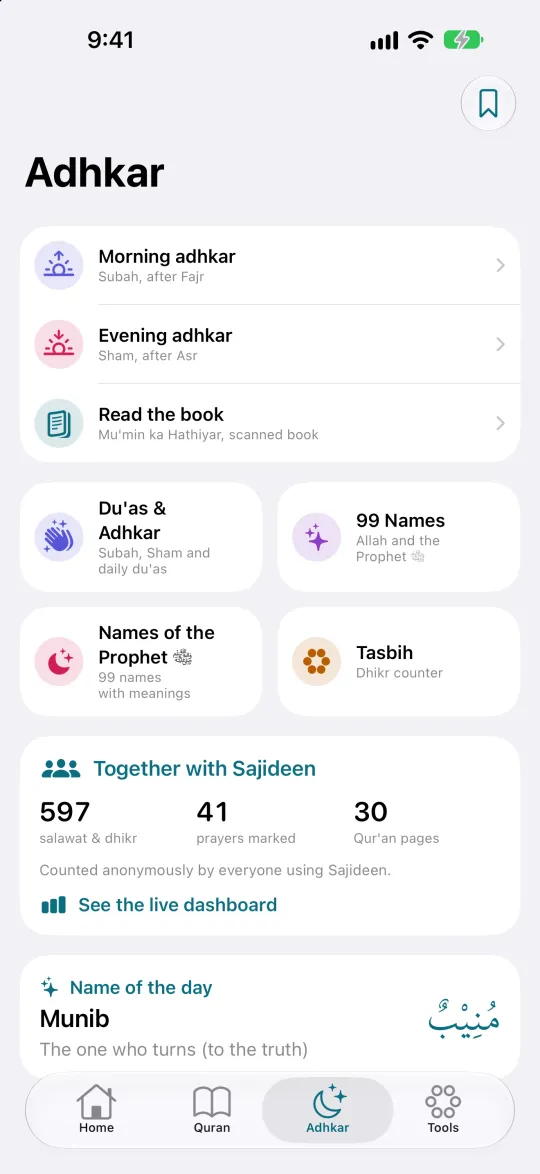
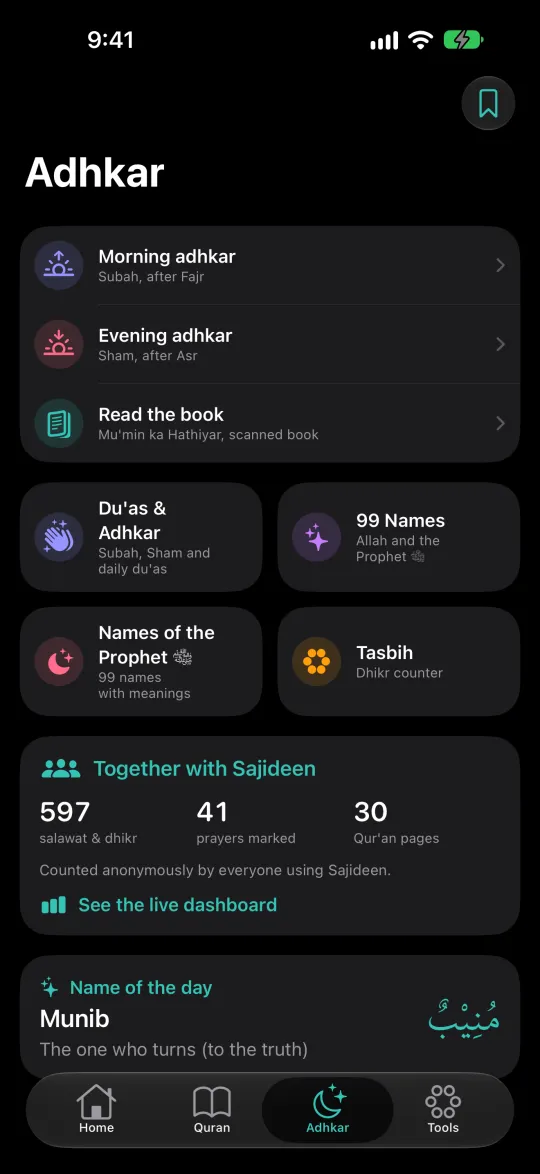
Read the book
The Adhkar tab has a Read the book shortcut for Mu'min ka Hathiyar. In the book you can pinch or double-tap to zoom into a page, so small print is easy to read.
Checked word for word
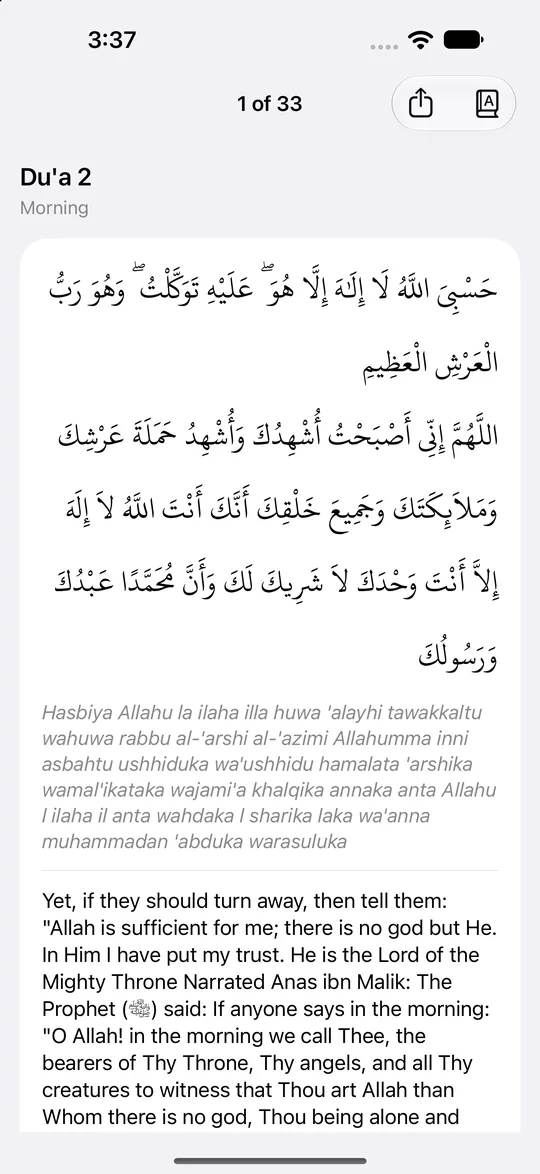
The Arabic of a du'a is never typed from memory. A du'a is shown only when its wording has been checked word for word against published Qur'an and hadith editions, and each one carries its reference: the hadith collection and number, and the page in the book it comes from. For du'as from Mu'min ka Hathiyar, Sajideen shows the reference as the book gives it. That is why some chapters hold fewer du'as than the printed book for now: more are added as they are checked.
Arabic, Urdu and English
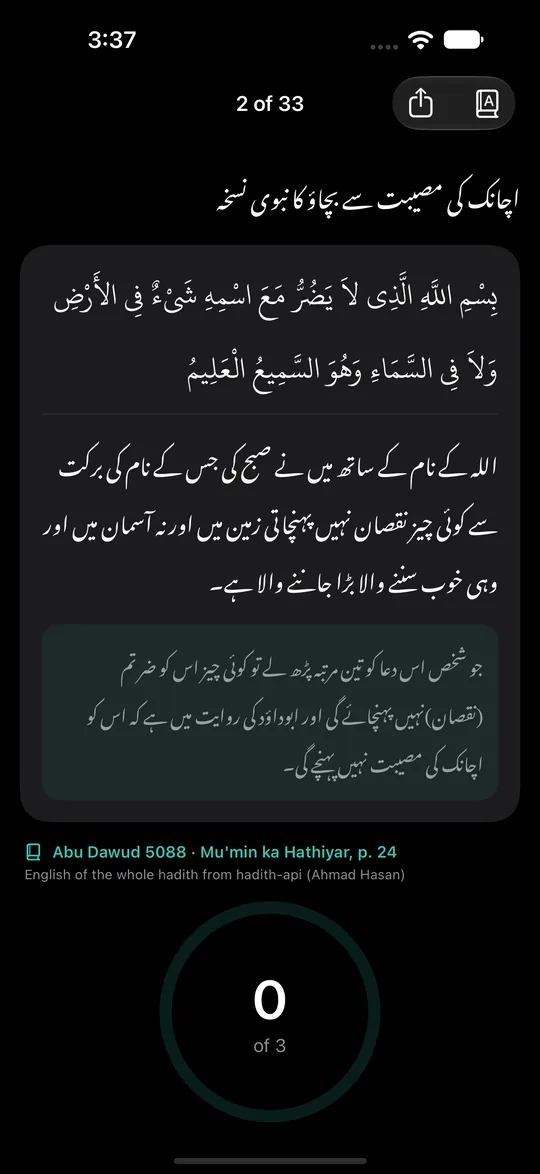
Each du'a is shown in Arabic, with a transliteration, and with its meaning in Urdu or English. The du'a screens have their own language picker (English, اردو or العربية) and a switch to hide the translation, so you can read the adhkar in Urdu while the rest of the app stays in English.
A counter for every dhikr
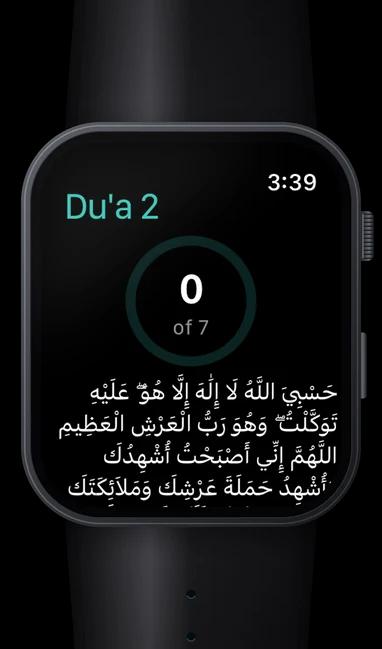
When a dhikr is said a number of times, three, seven, 33 or 100, it gets its own counter: tap anywhere on it to count. The morning and evening lists show how many you have completed today, and you can turn on a gentle reminder after Fajr and after Asr. For free-form dhikr there is also the Tasbih counter.
On your wrist
The Subah and Sham adhkar are on Apple Watch and Wear OS too, with the same counters, so you can read them after Fajr without taking your phone out. Save any du'a with a bookmark, and find it next to your Qur'an bookmarks.
Together with Sajideen
Your counts can join a shared, anonymous total of the salawat and dhikr counted by everyone who uses Sajideen. No name or account is attached, and you can turn it off in Settings. The totals are on the home page.