
Sehri and iftar, from the same prayer times
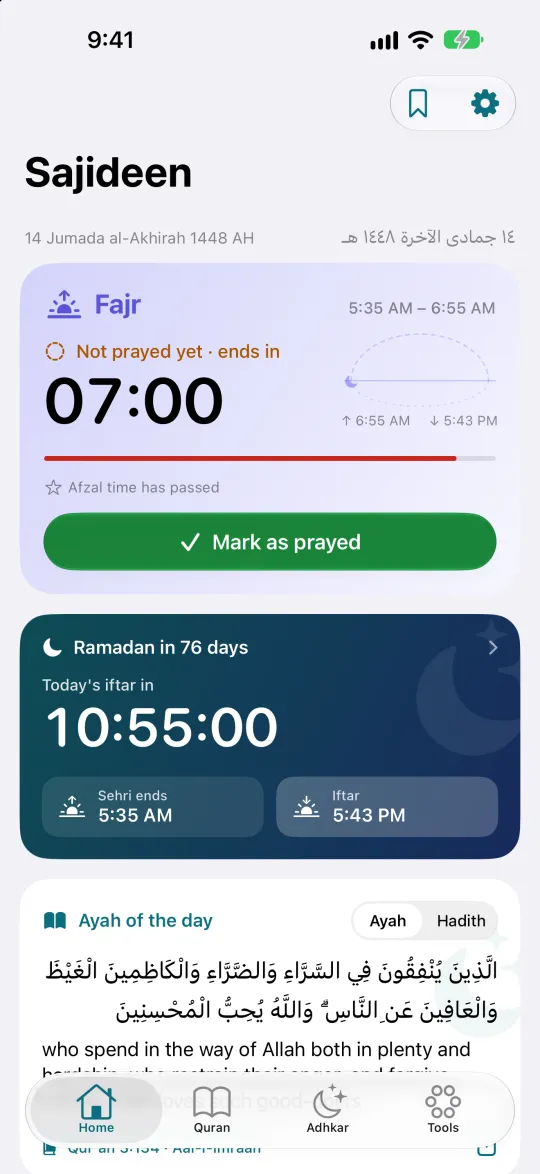
Sajideen works out sehri and iftar from the same on-device prayer times it uses all year: sehri ends when Fajr begins, and iftar is at Maghrib. The defaults are the University of Islamic Sciences, Karachi method, with Fajr at 18° below the horizon, and the times are calculated for your GPS location or any city you choose. There is no server and no internet connection needed to get them.
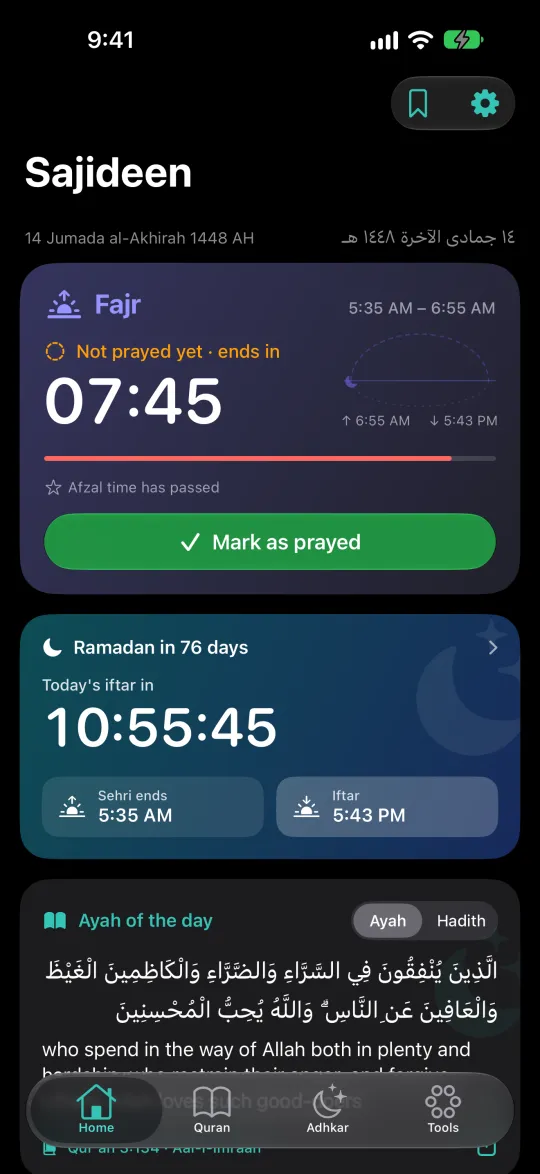
During the month, the app shows today's fast at a glance, with a countdown to whatever comes next: Sehri ends in before Fajr, and Iftar in while you are fasting. A table lists every day of Ramadan with its sehri and iftar times, today highlighted, so you can plan the whole month. The month has 29 or 30 days depending on the moon, and the app says so.
Sehri and iftar reminders
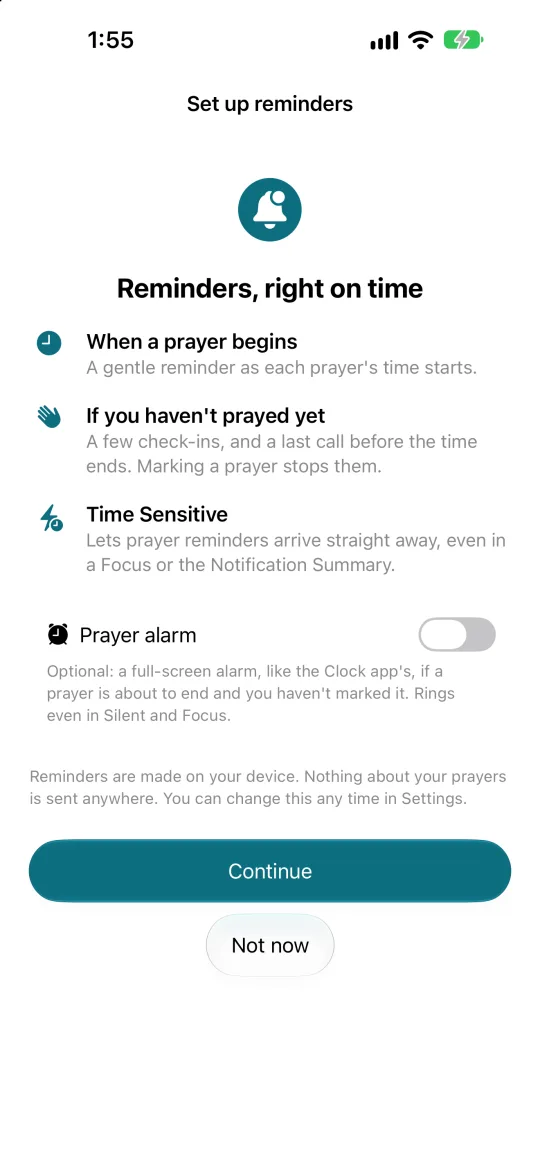
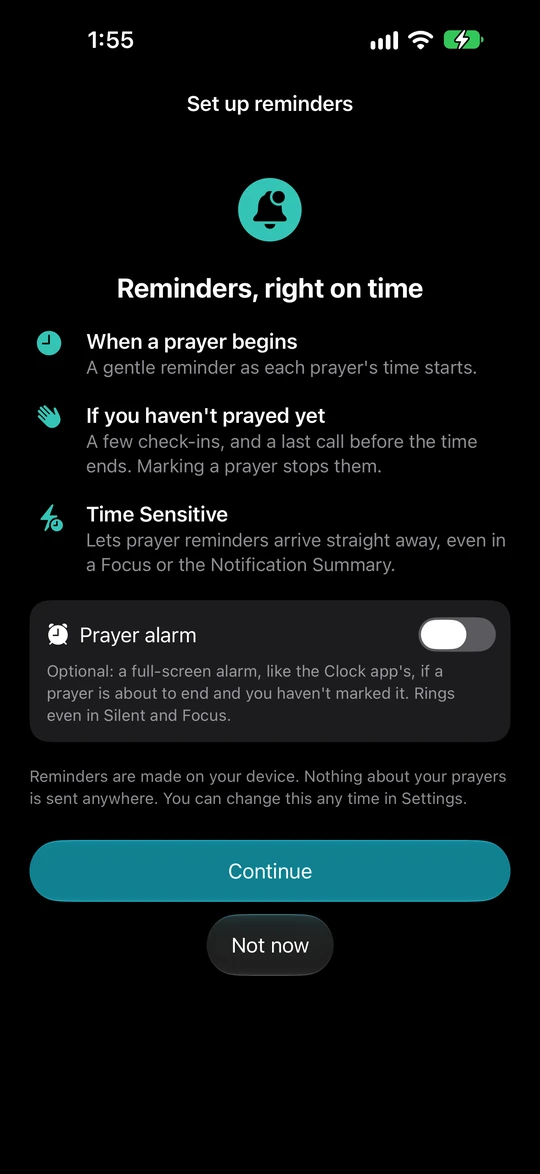
Two reminders can be switched on in settings. The sehri reminder arrives 30 minutes before sehri ends, so you have time to eat and drink. The iftar reminder is the Maghrib alert itself: on a fasting day it says that it is iftar time as Maghrib begins. They sit alongside Sajideen's prayer reminders that keep asking until you have prayed, which matter just as much in Ramadan, when the nights are short and Fajr comes early.
Moon sighting differs by country
Moon-sighting authorities regularly put the start of Ramadan or Eid on different days. Pakistan's Ruet-e-Hilal Committee and Saudi Arabia's Umm al-Qura calendar regularly differ, so an app that hard-codes a single answer is wrong for millions of people. In Sajideen you choose the authority you follow:
- Pakistan: Central Ruet-e-Hilal Committee
- India
- Bangladesh
- Saudi Arabia: Umm al-Qura
- Turkey: Diyanet (calculated)
- North America: Fiqh Council (calculated)
- UK and Europe: follows Saudi Arabia
- Local sighting, set manually
For each one, Sajideen ships a calculated expected date. When the authority announces its sighting, a small public feed at sajideen.app/hilal.json is updated and the date in the app changes from Expected to Confirmed, with no app update. You can always see which of the two you are looking at.
The rest of the month
Ramadan is when many people pray more and recite more. The Tasbih counter keeps count of your dhikr on your wrist, the yearly prayer calendar shows every prayer time for the months ahead, and an ayah and a hadith appear each day, quoted verbatim from the Qur'an and from Sahih al-Bukhari and Sahih Muslim. If Ramadan takes you to Makkah for Umrah, the Tawaf and Sa'i counter is in the same app.
Everything is free, with no ads and no account, on Apple Watch, iPhone, Android and Wear OS.